
Easter arrives quietly.
Light grows softer.
Rooms feel ready for something gentle.
This season is not about excess. It is about noticing small shifts—morning light on the table, a branch resting near the window, colors that feel calm rather than loud. In this space, decoration becomes a form of care. A way to slow down. A way to tell yourself that beauty can be simple.
As you read, imagine these ideas like pages from a quiet notebook.
Take what feels right.
Leave the rest.
Soft Foundations for the Home
1. Neutral Egg Bowls on the Table
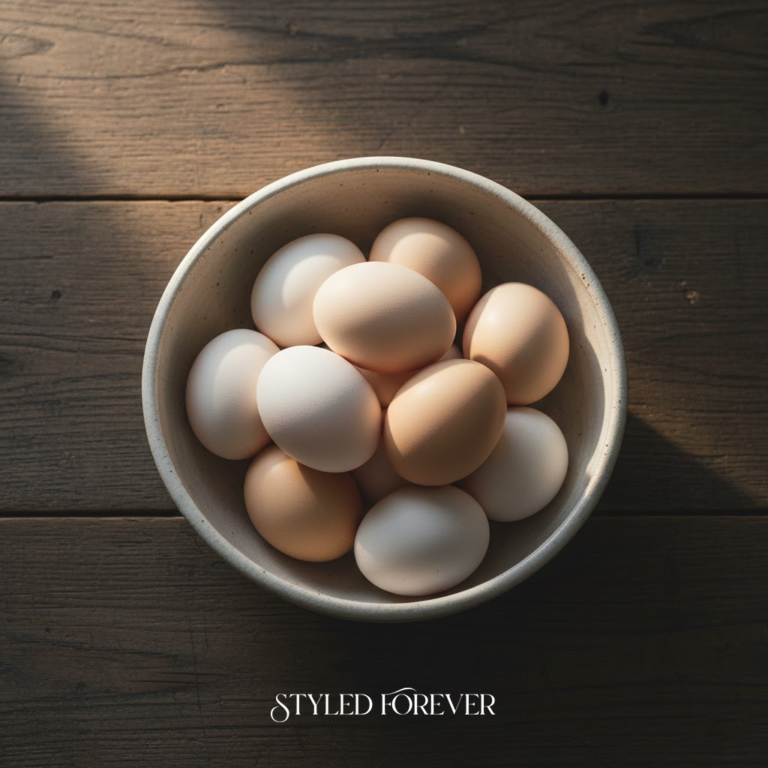
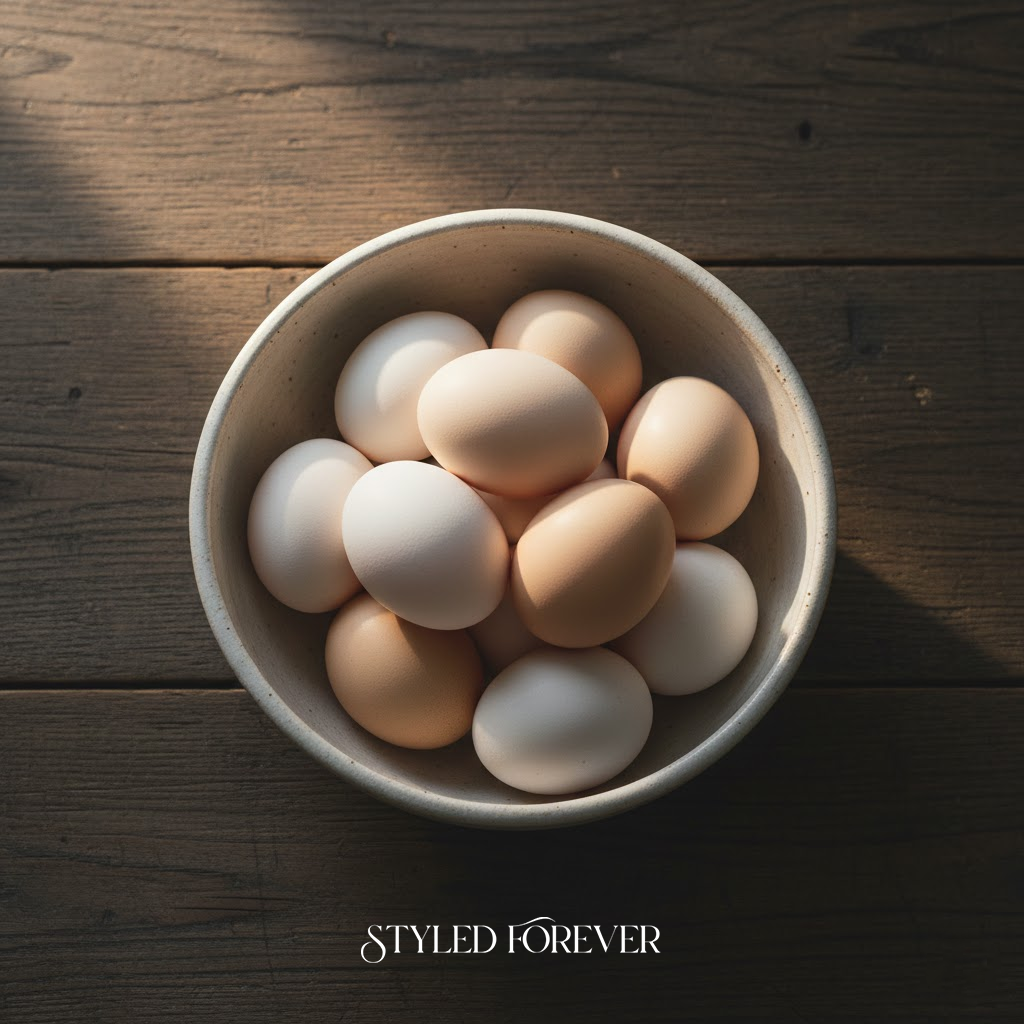
A shallow ceramic bowl filled with eggs in muted tones—linen white, soft clay, pale sand. Nothing glossy. Nothing loud. Let them rest naturally, uneven and imperfect. Place the bowl where light touches it in the morning. The effect is subtle and grounding, like a still life you live beside. This works best when the table is mostly bare—wood grain visible, space allowed. It feels calm. It feels intentional. It asks for nothing more.
2. Linen Table Runners with Raw Edges
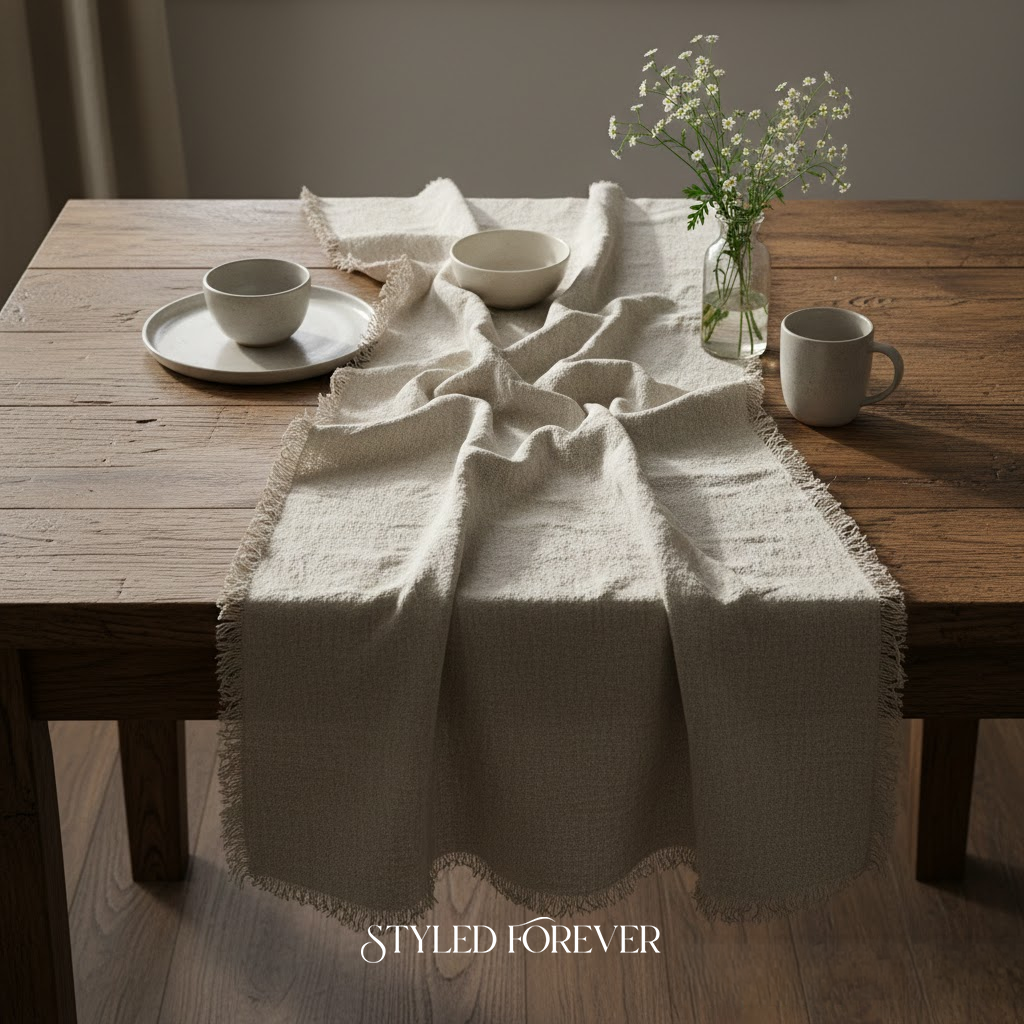
A linen runner draped loosely across the table changes the room without effort. Choose fabric with a soft weave and unfinished edges. Let it fall naturally, not centered, not measured. Pair it with simple tableware and allow the fabric to do the quiet work. The texture matters more than color—oat, stone, faded white. It feels lived-in and peaceful, like something you would keep out long after Easter passes.
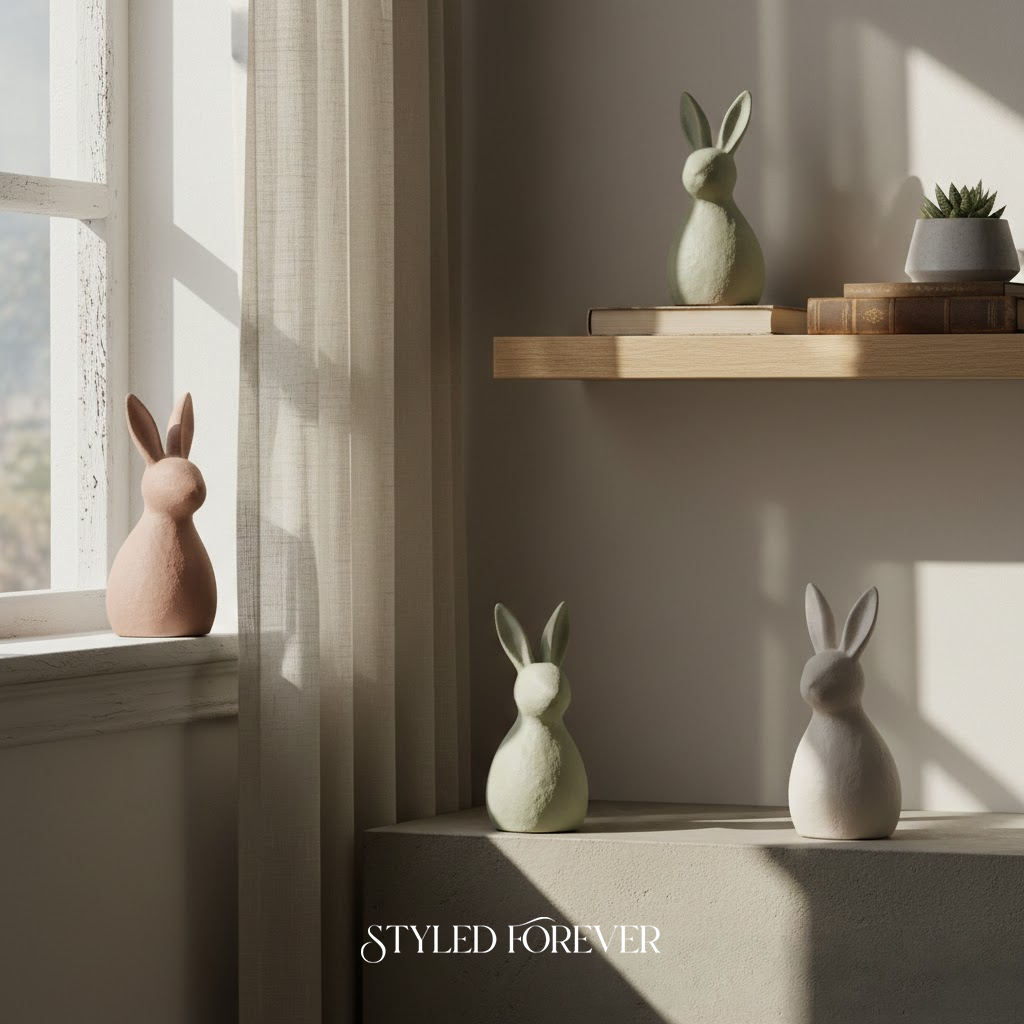
3. Ceramic Bunnies in Soft Matte Finishes
Skip shiny figures. Look for small ceramic bunnies with matte surfaces and gentle shapes. They do not need faces or details. Place one near a window, another on a shelf. They should feel like they belong there already. These pieces work best when spaced apart—never grouped tightly. Each one holds its own quiet presence, like a pause between sentences.
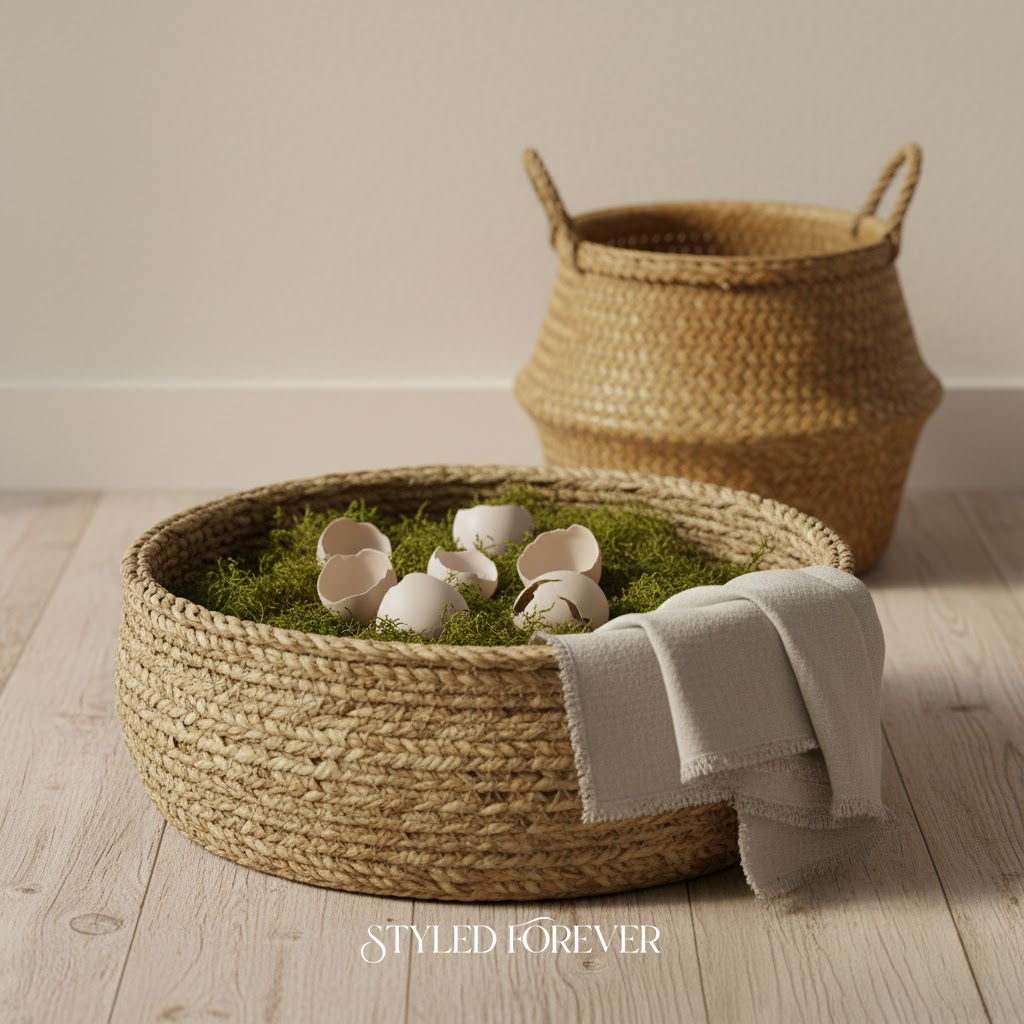
4. Woven Baskets Filled with Natural Elements
A simple basket can hold more than objects—it holds mood. Fill one with eggshells, moss, or folded linen napkins. Another can sit empty, simply resting against a wall. The weave brings warmth without drawing attention. Choose baskets that feel soft to the eye, slightly worn, slightly uneven. They suggest care rather than decoration. They feel grounded and human.
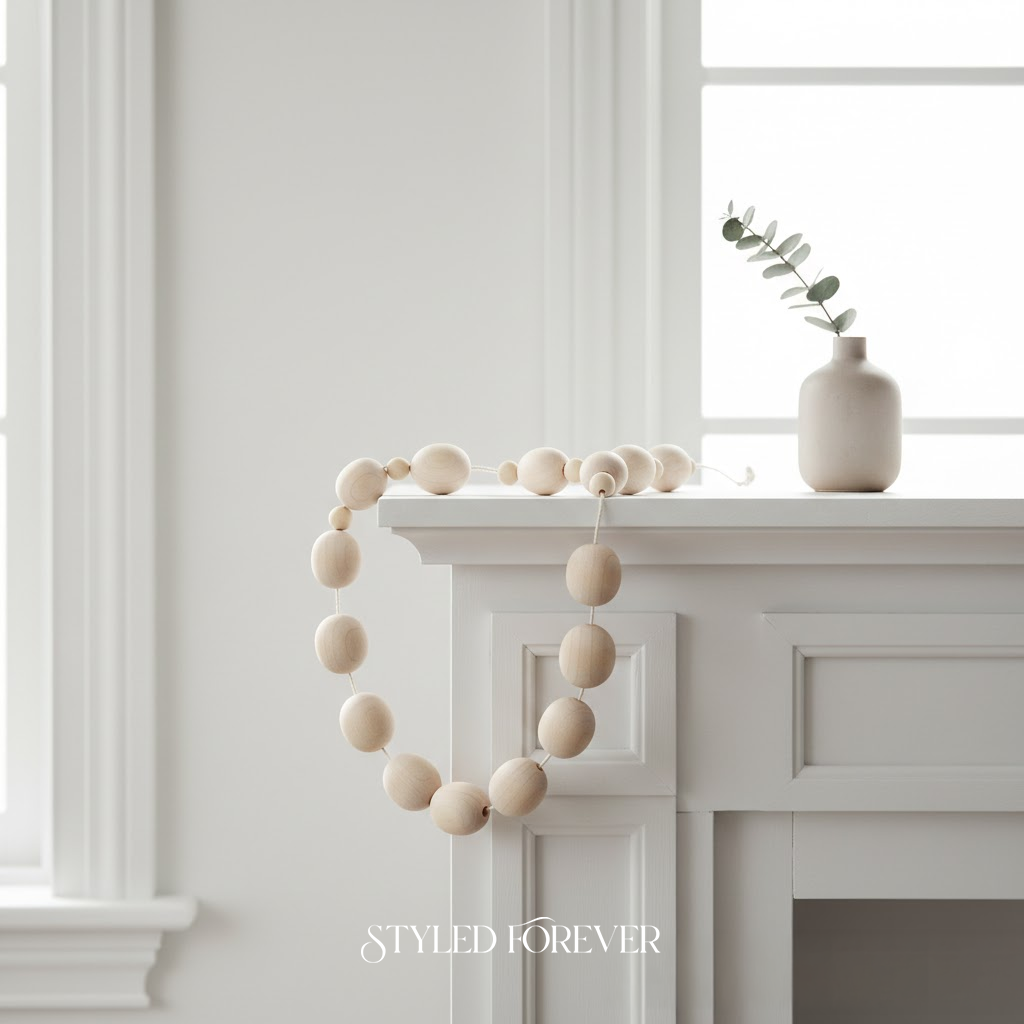
5. Wooden Egg Garlands for Subtle Movement
A strand of wooden eggs, unfinished and pale, adds gentle rhythm to a space. Drape it across a mantel or along a shelf edge. The movement is quiet, almost unnoticed, but it softens hard lines. Wood brings warmth without color. It works especially well in rooms with white walls and natural light. The garland becomes part of the architecture rather than an accent.
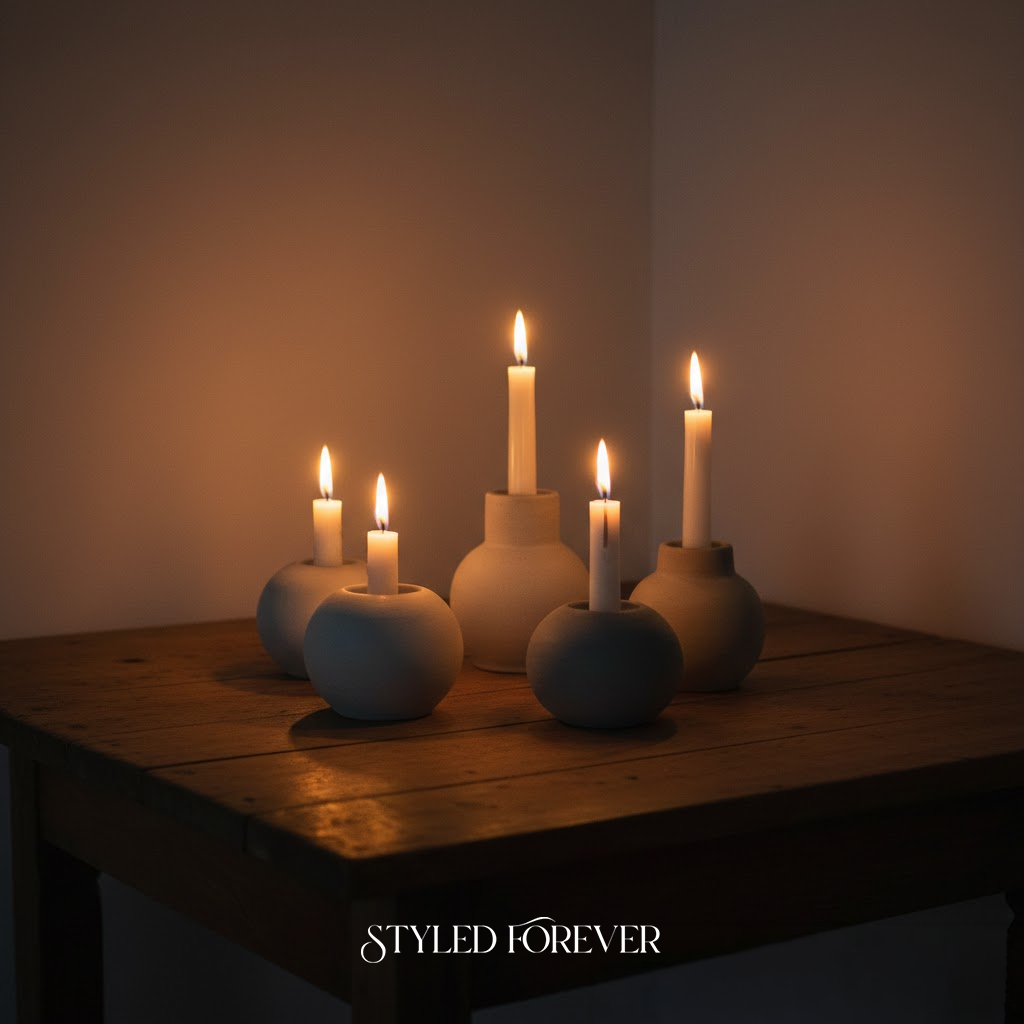
6. Stoneware Candle Holders for Evening Light
As the day fades, candlelight becomes the decoration. Choose stoneware holders with simple forms—rounded, heavy, grounded. White or soft grey works best. Light a few at dusk and let shadows move across the room. There is no need for scent. The warmth of the flame is enough. This kind of decoration lives in time, not space.
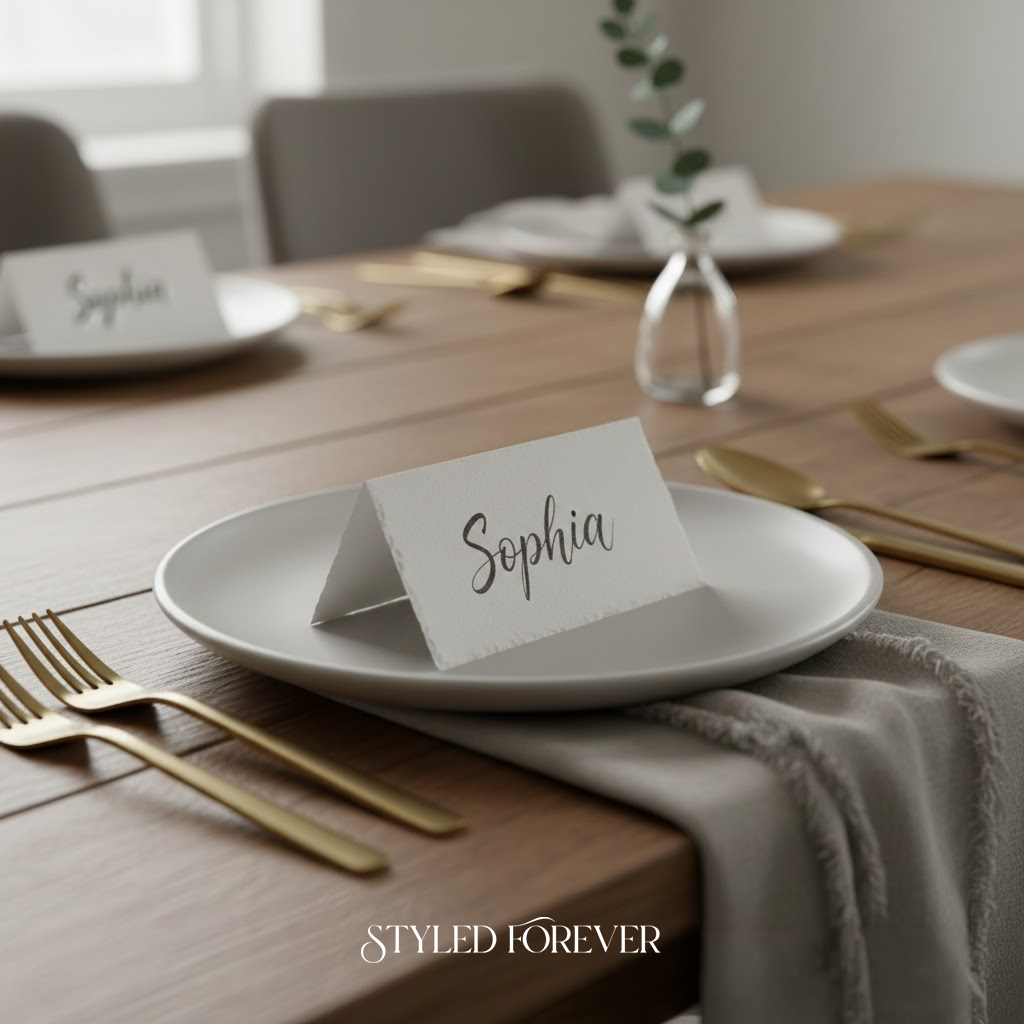
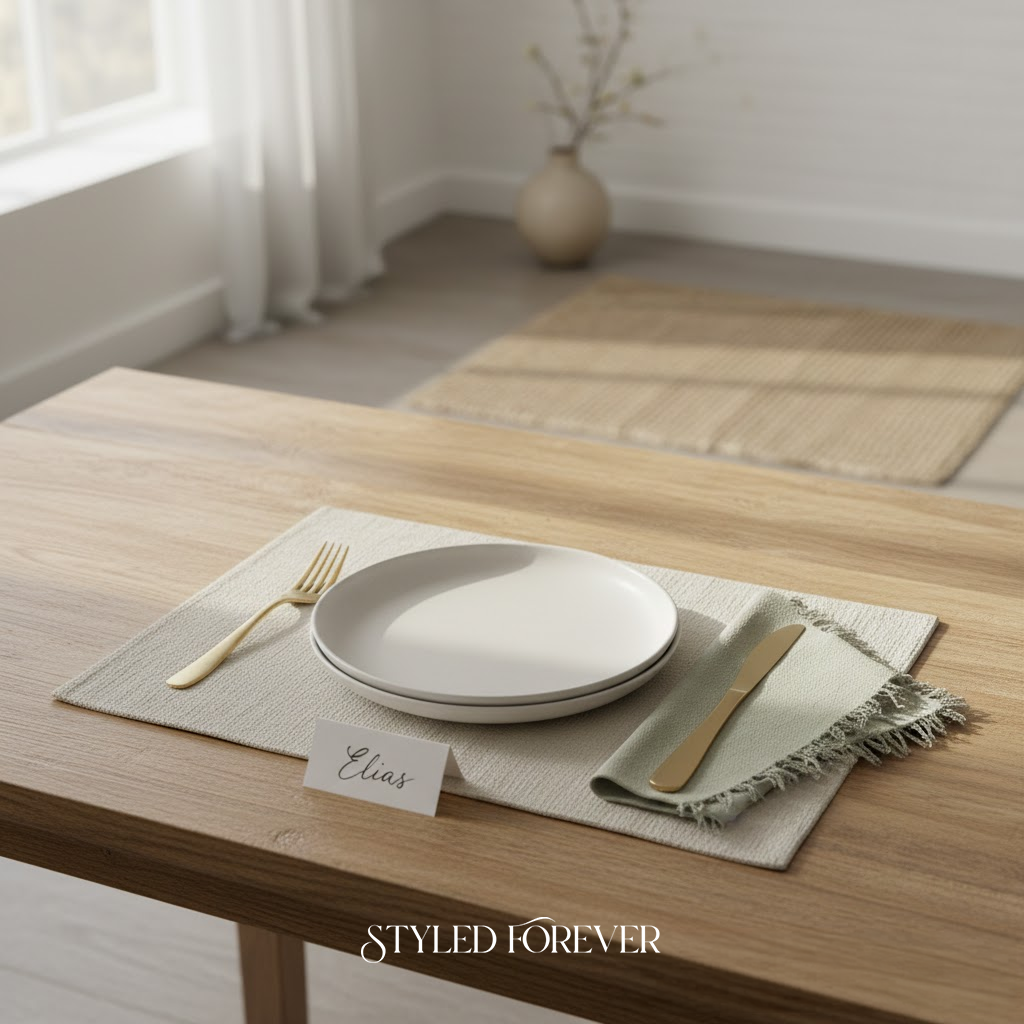
7. Minimal Place Cards with Handwritten Names
A folded piece of textured paper. A name written slowly. Nothing more. Place cards can be a moment of care for your guests, even if the gathering is small. The handwriting matters more than the design. Let it be imperfect. Let it feel human. This detail sits quietly on the table, reminding everyone to slow down.
Gentle Spring Touches
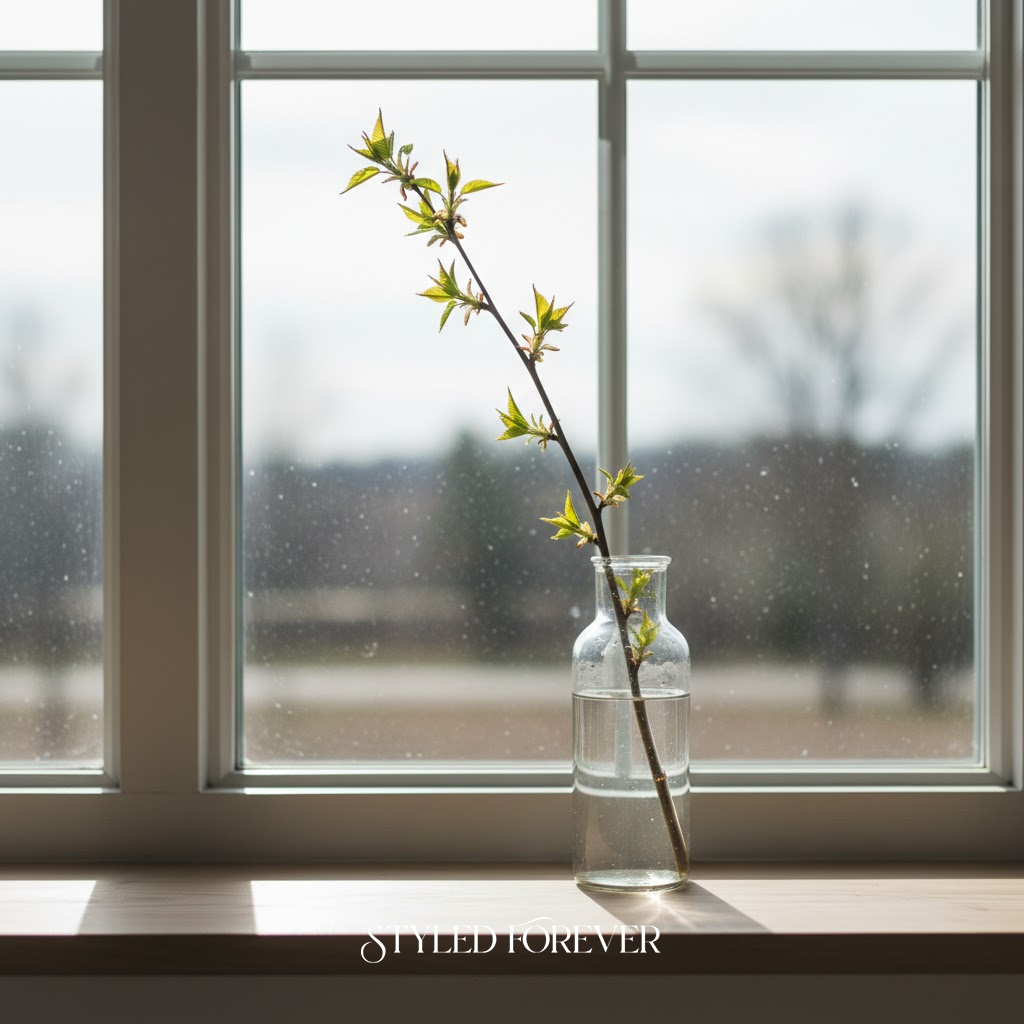
8. Branches in Clear Glass Vases
One branch is enough. Choose something with soft buds or tiny leaves just beginning to open. Place it in a clear glass vase and set it near a window. Watch how the light passes through water and stem. This decoration changes daily. It asks you to notice growth in real time. There is something grounding in that simplicity.
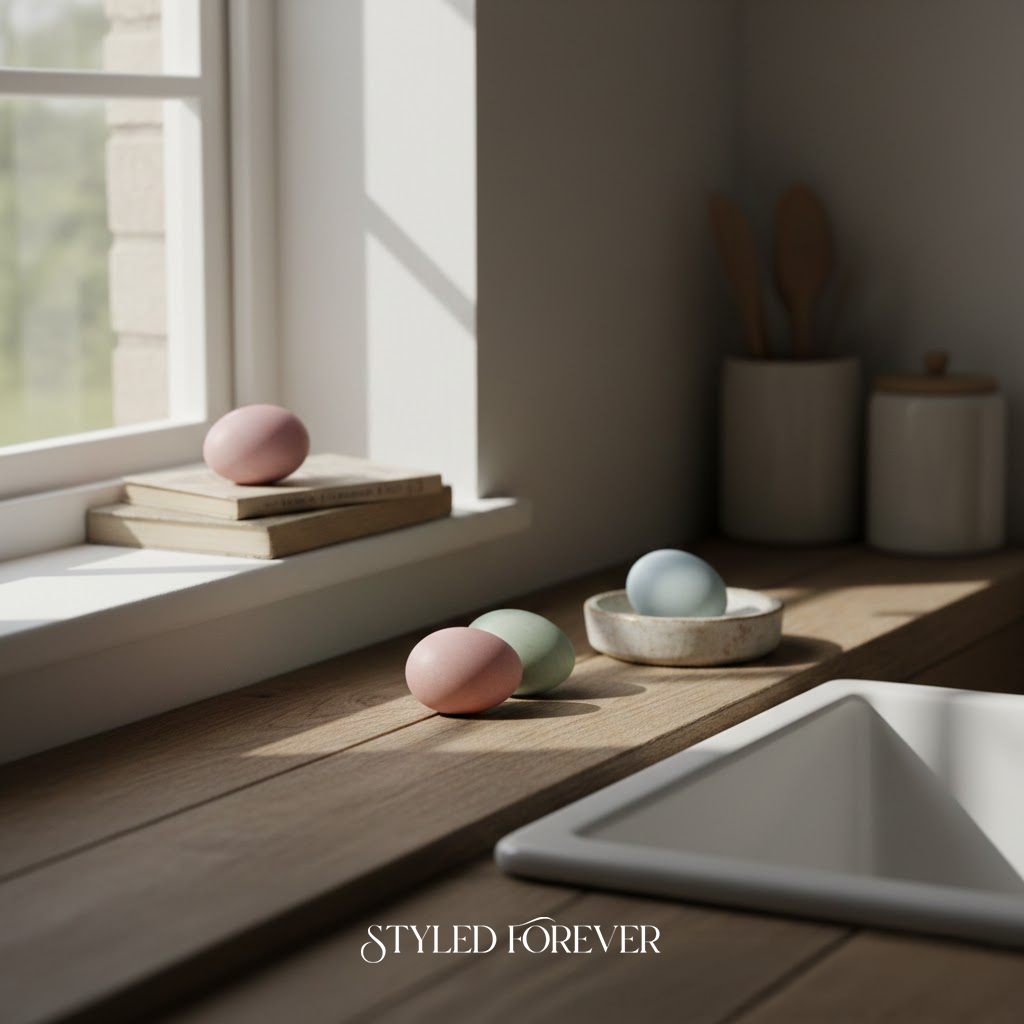
9. Pastel Eggs Tucked into Unexpected Corners
Not everything needs to be centered. Place a few pastel eggs on a windowsill, beside a stack of books, or near the sink. Choose colors that feel washed and quiet—dusty pink, pale blue, soft sage. These small moments feel discovered rather than styled. They create a sense of ease, like details you stumble upon slowly.
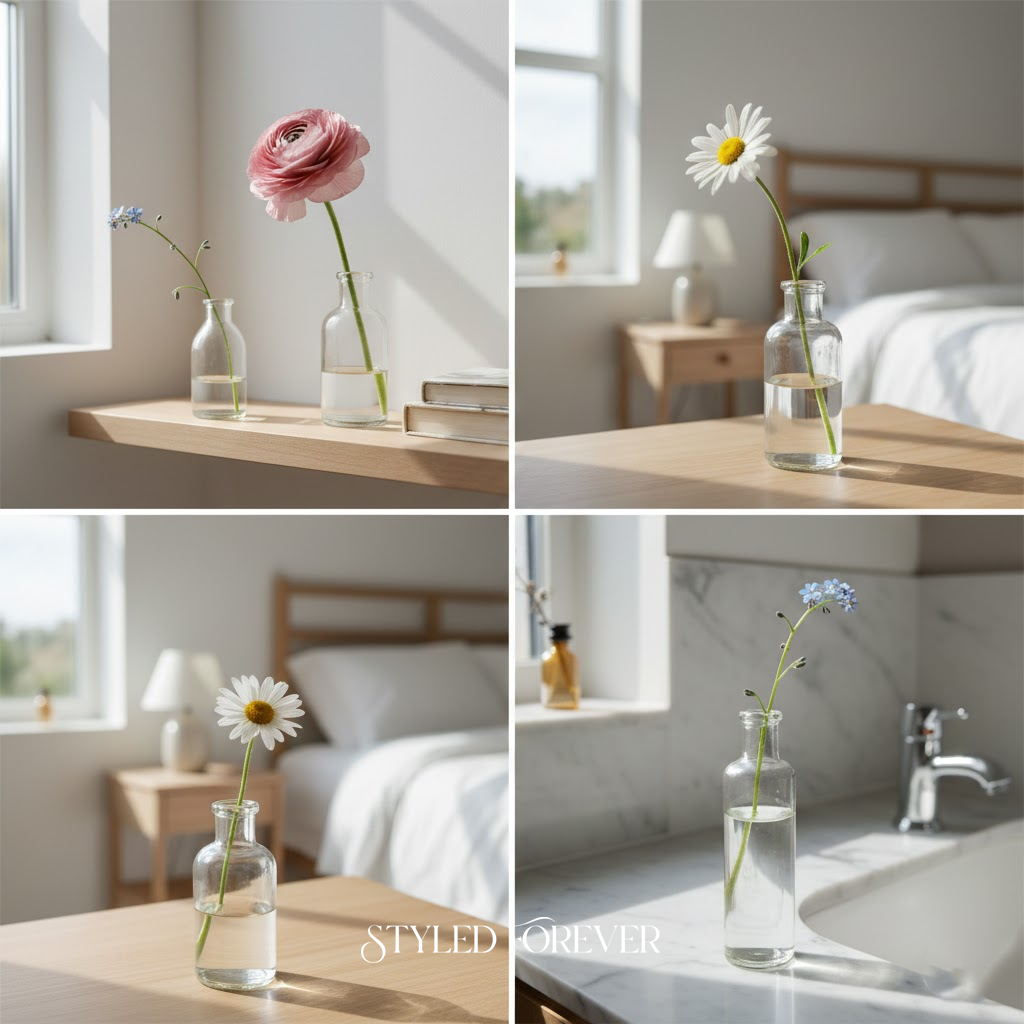
10. Floral Stems in Small Bottles
Instead of full arrangements, try single stems in small glass bottles. Spread them across a room—one on a shelf, one on a bedside table, one in the bathroom. The repetition creates calm. Choose flowers with simple shapes and muted tones. The space around each stem matters as much as the flower itself.
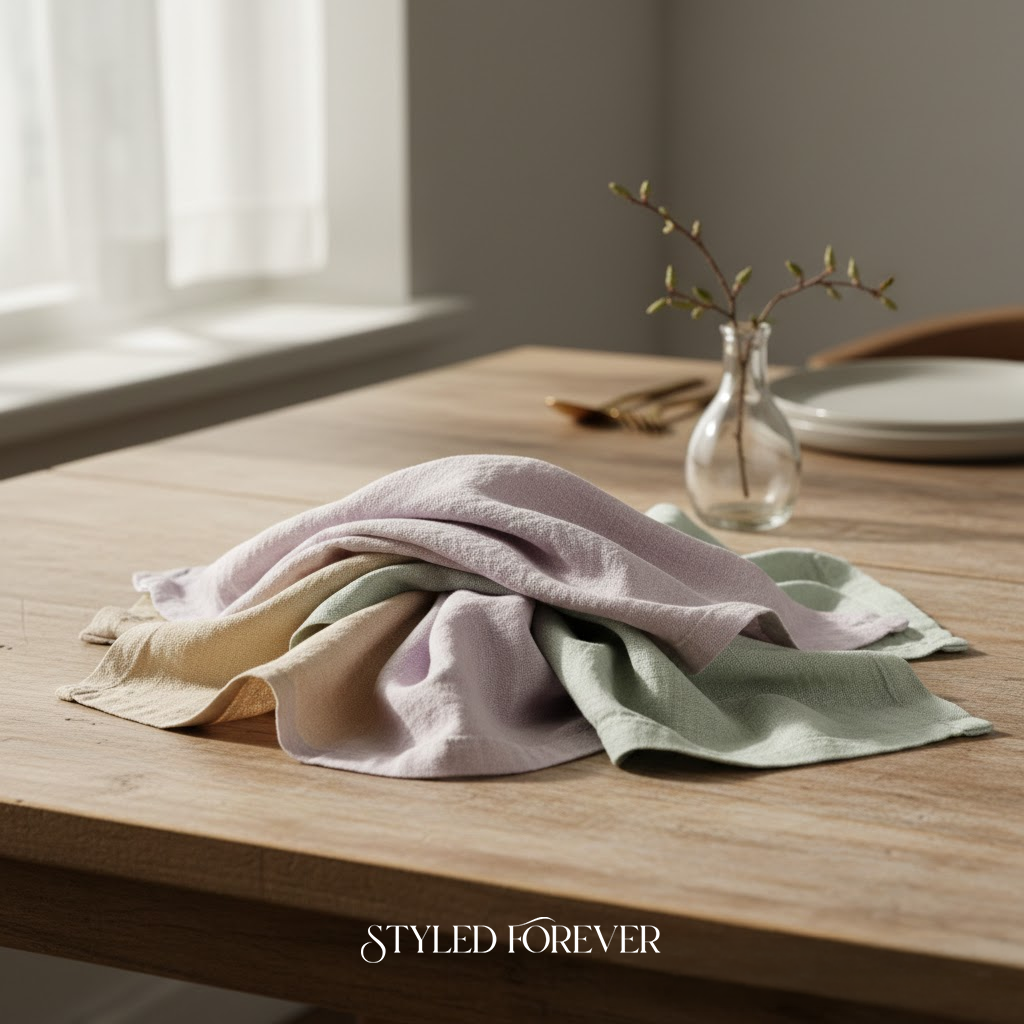
11. Fabric Napkins Dyed in Soft Colors
Cloth napkins bring warmth to any table. Choose ones dyed in gentle shades—warm beige, pale lavender, muted green. Fold them loosely. Let creases show. This detail feels caring without effort. It suggests time taken, but not rushed. It is a quiet way to mark the season.
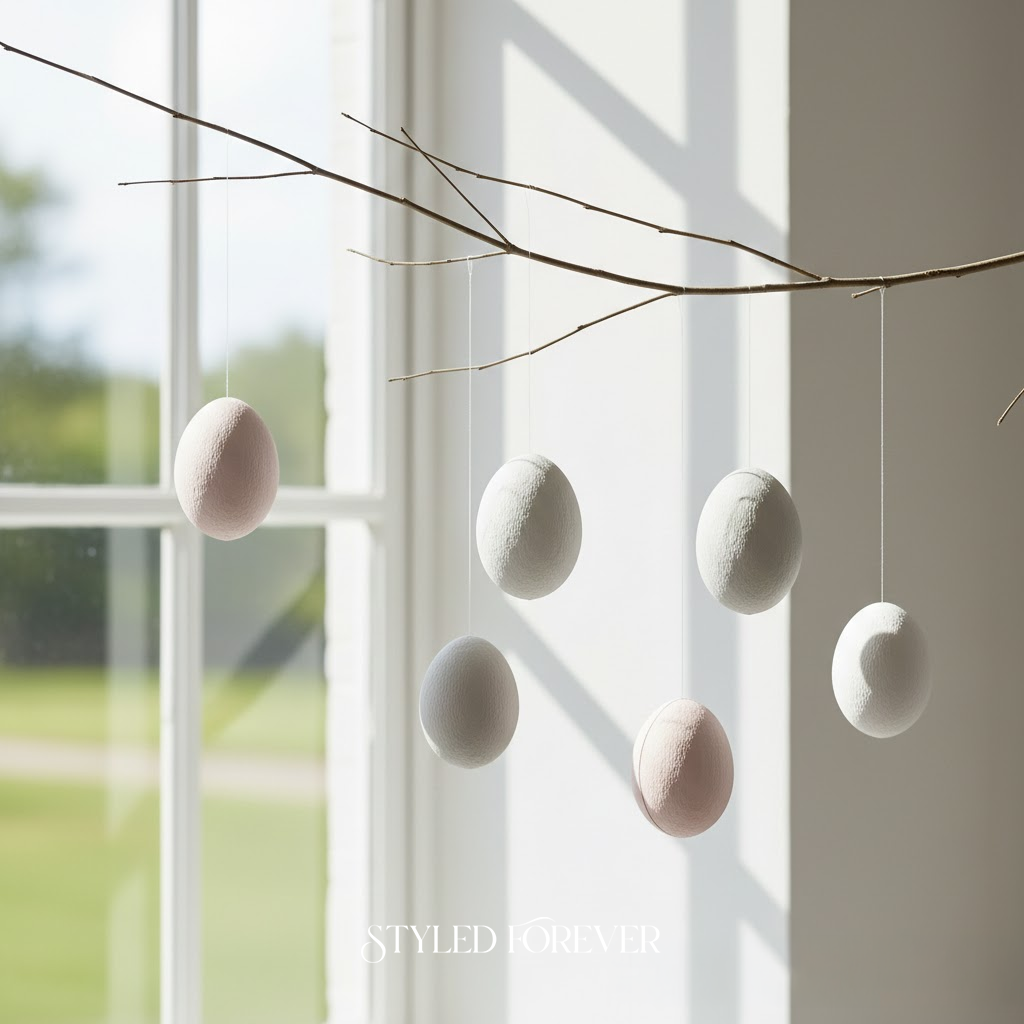
12. Paper Eggs Hung with Thread
Lightweight paper eggs, hung from thin thread, move softly with air. Suspend them near a window or from a simple branch indoors. Keep the palette minimal—white, soft grey, faint blush. The movement is barely there, but it changes the room. It feels dreamy without being fragile.
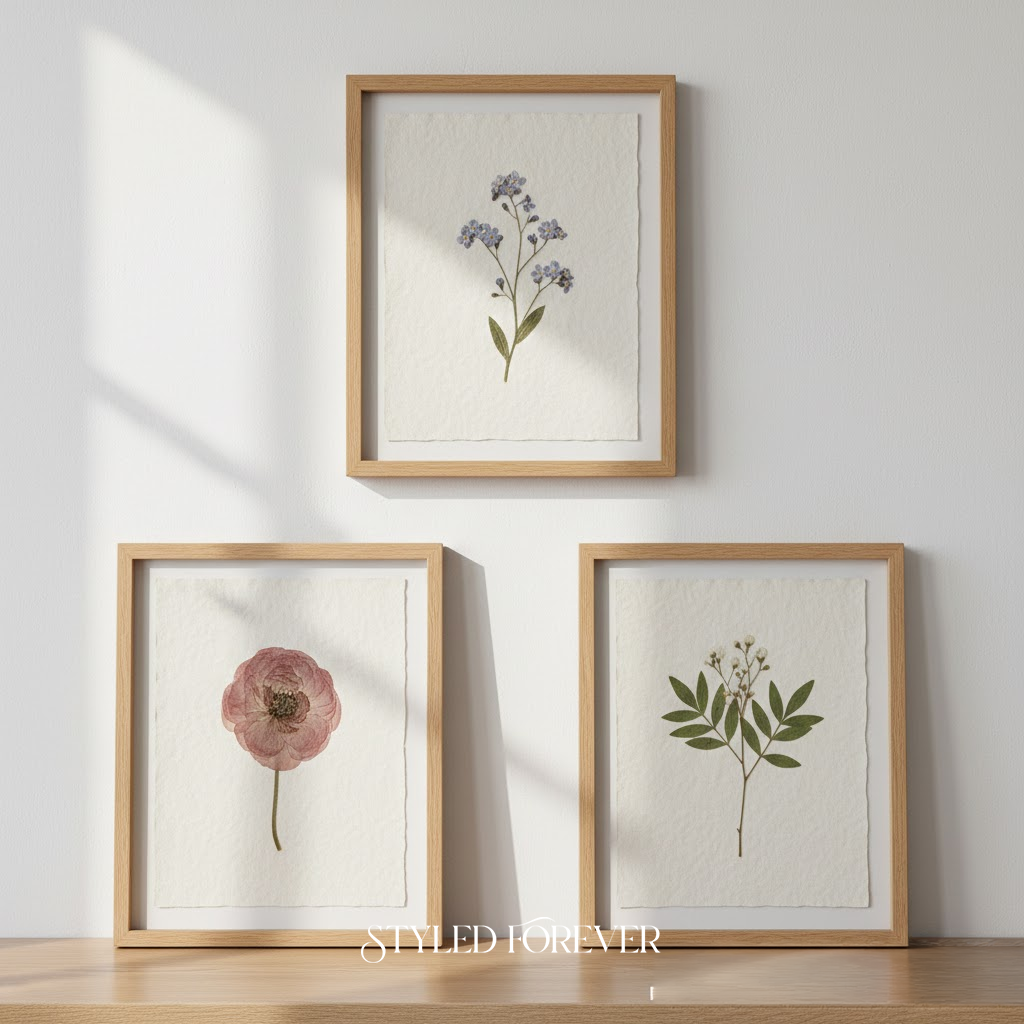
13. Pressed Flowers Framed Simply
Pressed flowers bring spring indoors in a lasting way. Frame them in thin wooden frames with plenty of space around the stem. Hang them at eye level, or lean them against a wall. This decoration feels thoughtful and slow. It invites you to look closely. It holds the memory of spring rather than the moment.
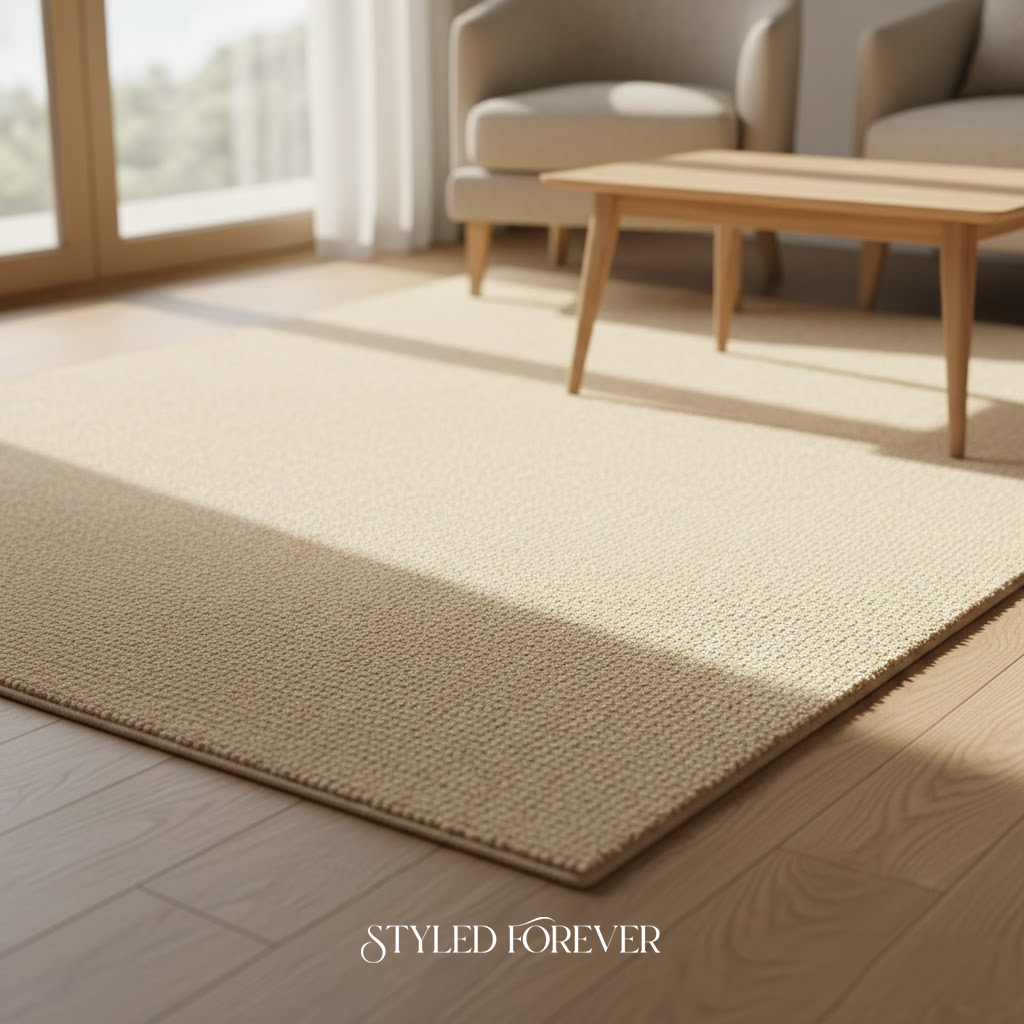
14. Soft Rugs in Seasonal Tones
A rug can shift the mood of a room more than you expect. Choose one in a gentle tone that reflects spring light—warm ivory, pale sand. Place it where you gather most. It grounds the space and adds comfort without visual weight. Easter decoration can live underfoot, quietly supporting everything else.
Dreamy Details and Playful Notes
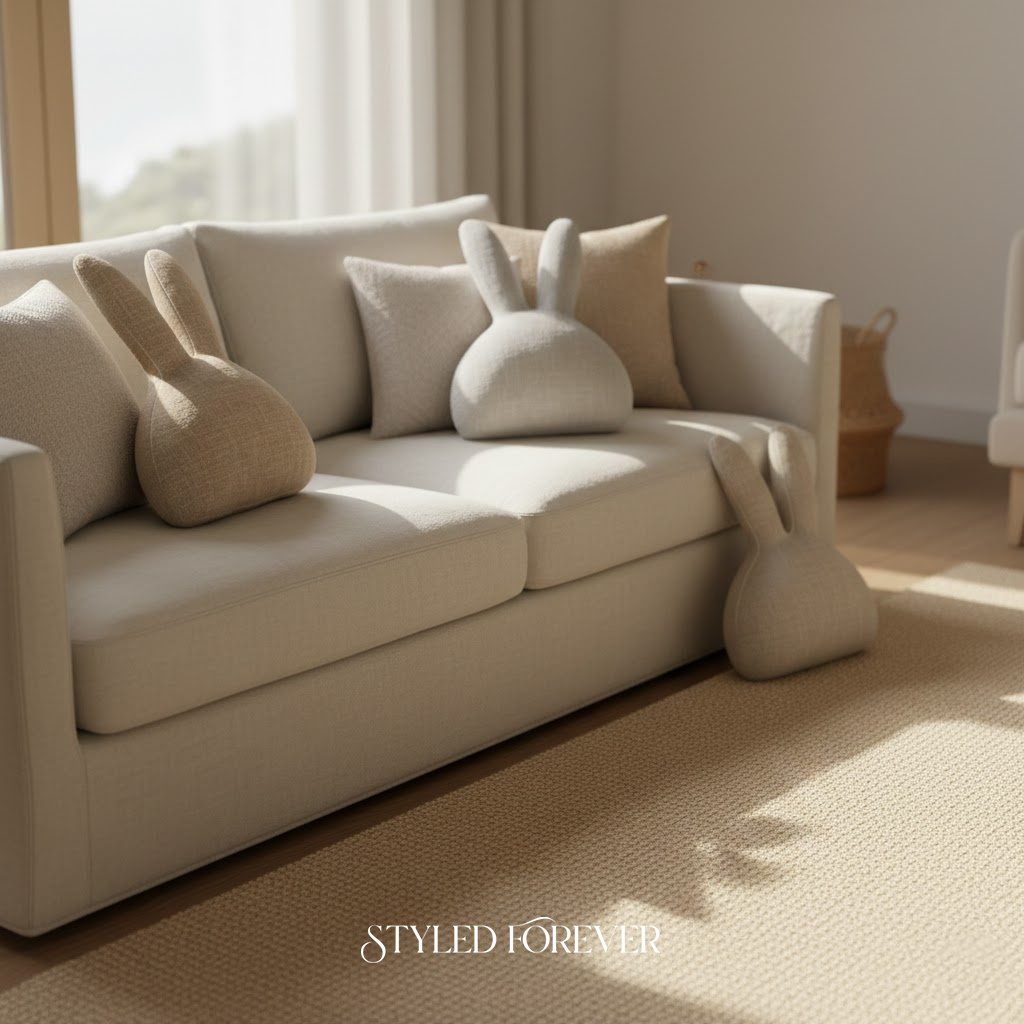
15. Bunny-Shaped Pillows in Neutral Fabrics
A pillow shaped like a bunny can feel playful without feeling childish. Choose linen or cotton in soft neutral shades. Let the shape be simple, almost abstract. Place it on a chair or bed where it feels natural. This detail brings warmth and a quiet sense of joy, especially in shared spaces.
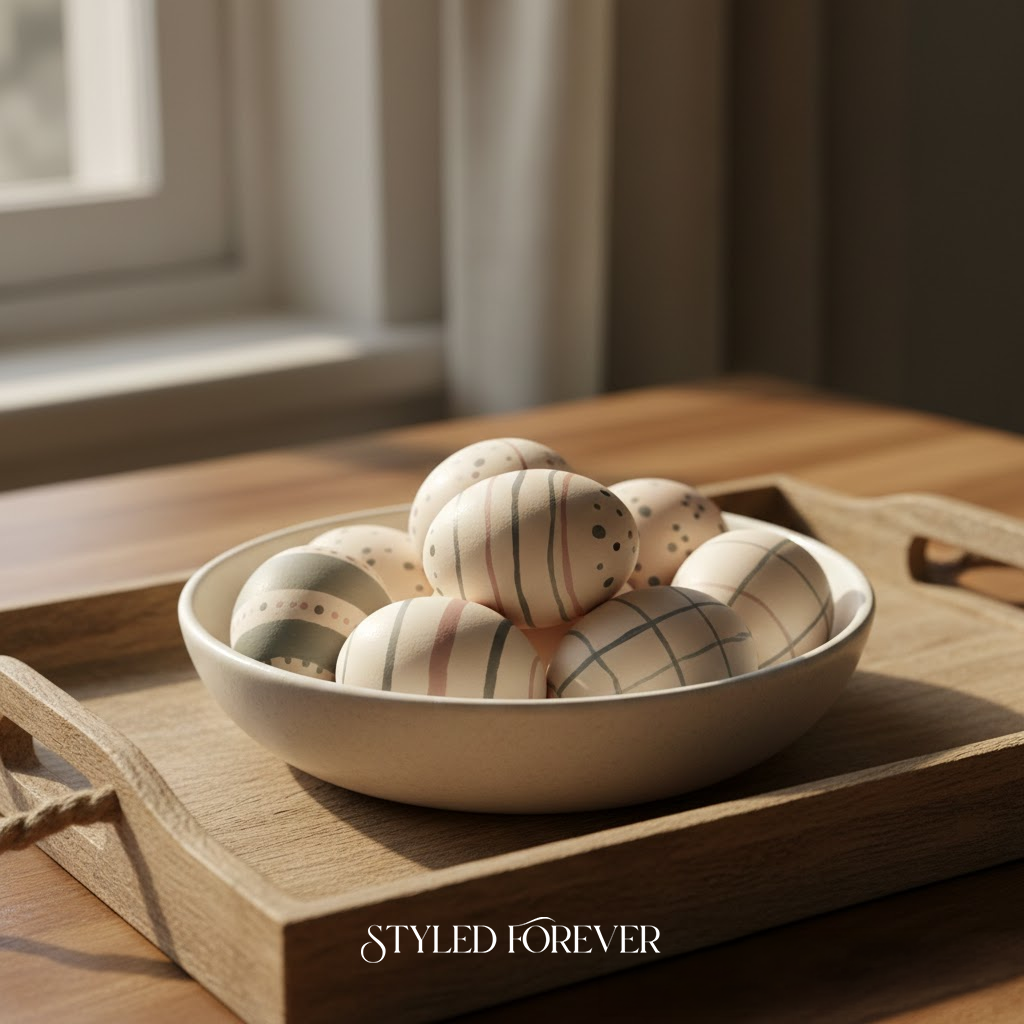
16. Hand-Painted Eggs with Minimal Patterns
Instead of bright designs, paint eggs with simple lines or dots in soft tones. Leave space. Let the shell show through. These eggs feel personal, like small studies rather than decorations. Display them on a tray or in a shallow bowl. Each one feels thoughtful, never loud.
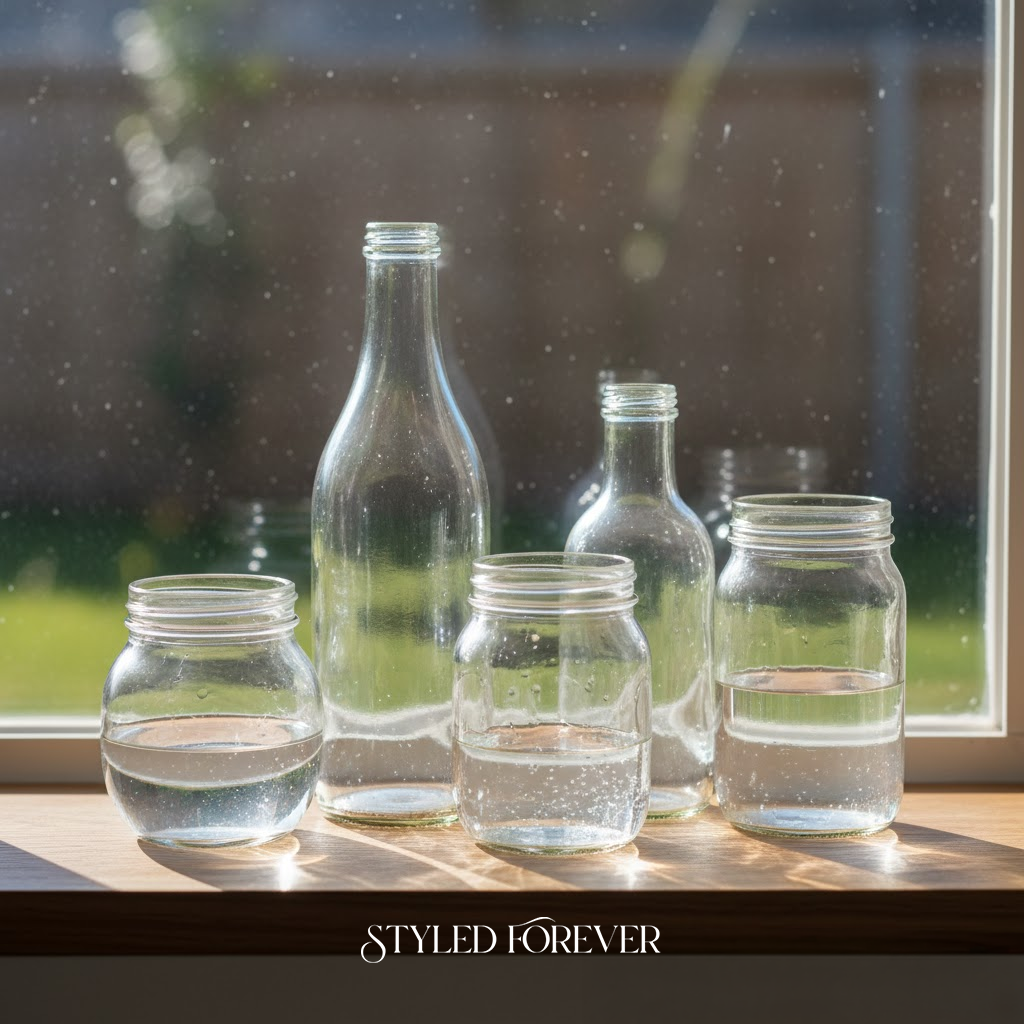
17. Glass Jars Filled with Spring Light
Clear jars filled with nothing but light can still feel seasonal. Place them near windows where sunlight can pass through. Add water if you like, or leave them empty. Sometimes reflection is enough. This idea is about space and air, about letting the room breathe.
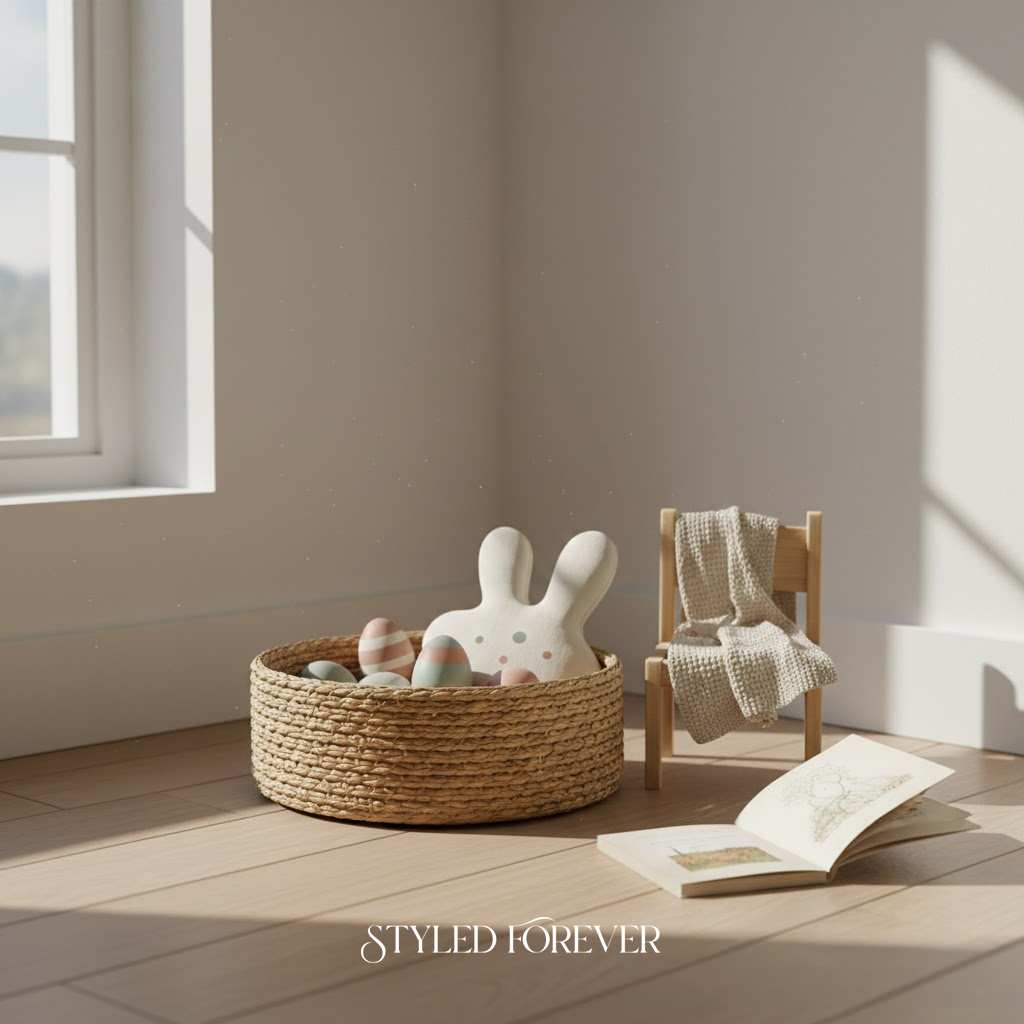
18. Quiet Corner Displays for Children
If there are children in your home, create a small Easter corner just for them. A low basket, a soft bunny, a few eggs. Keep it simple. This space feels inviting without overwhelm. It becomes a place to pause, to sit, to notice. Play does not need noise to be meaningful.
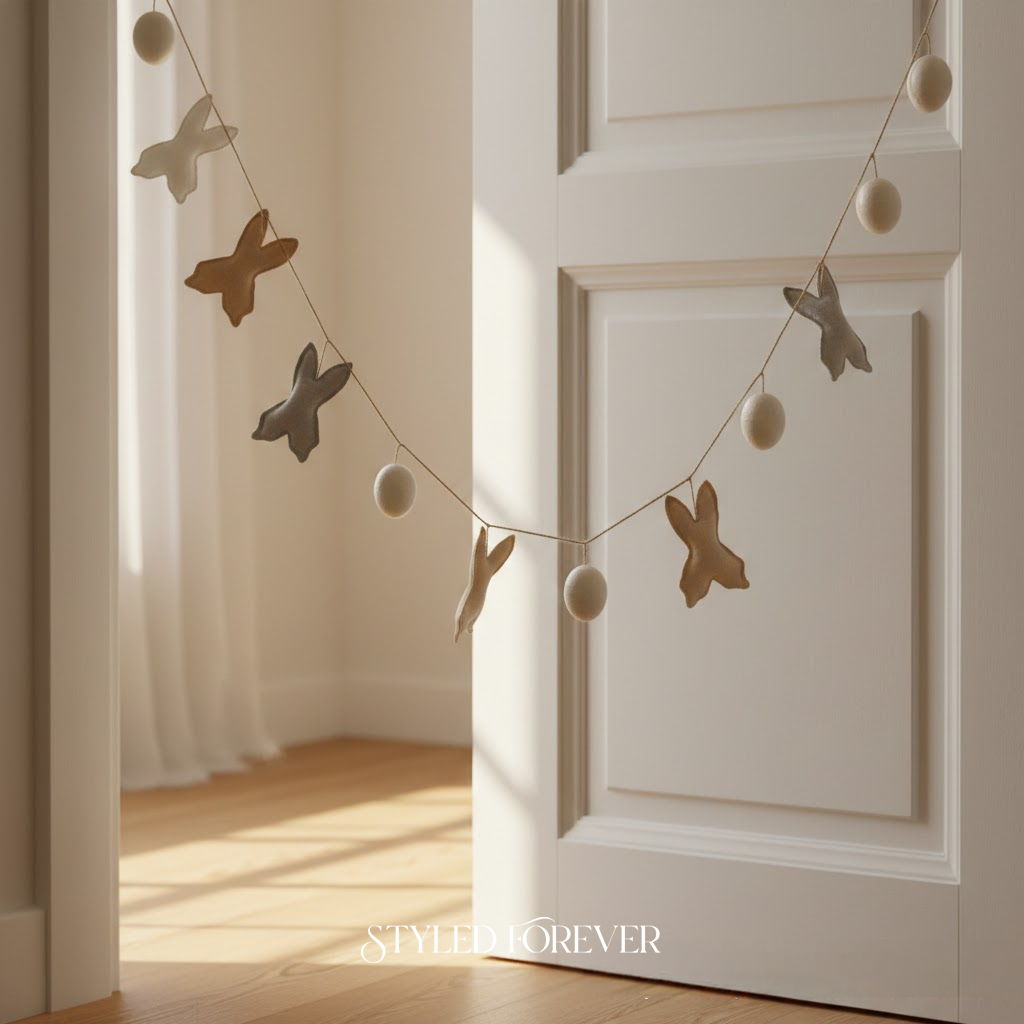
19. Soft Garland Over Doorways
A fabric or paper garland draped lightly over a doorway marks transition. Choose materials that fall naturally and colors that stay close to neutral. As you walk beneath it, the shift feels gentle. It is a quiet way to move from one space to another during the season.
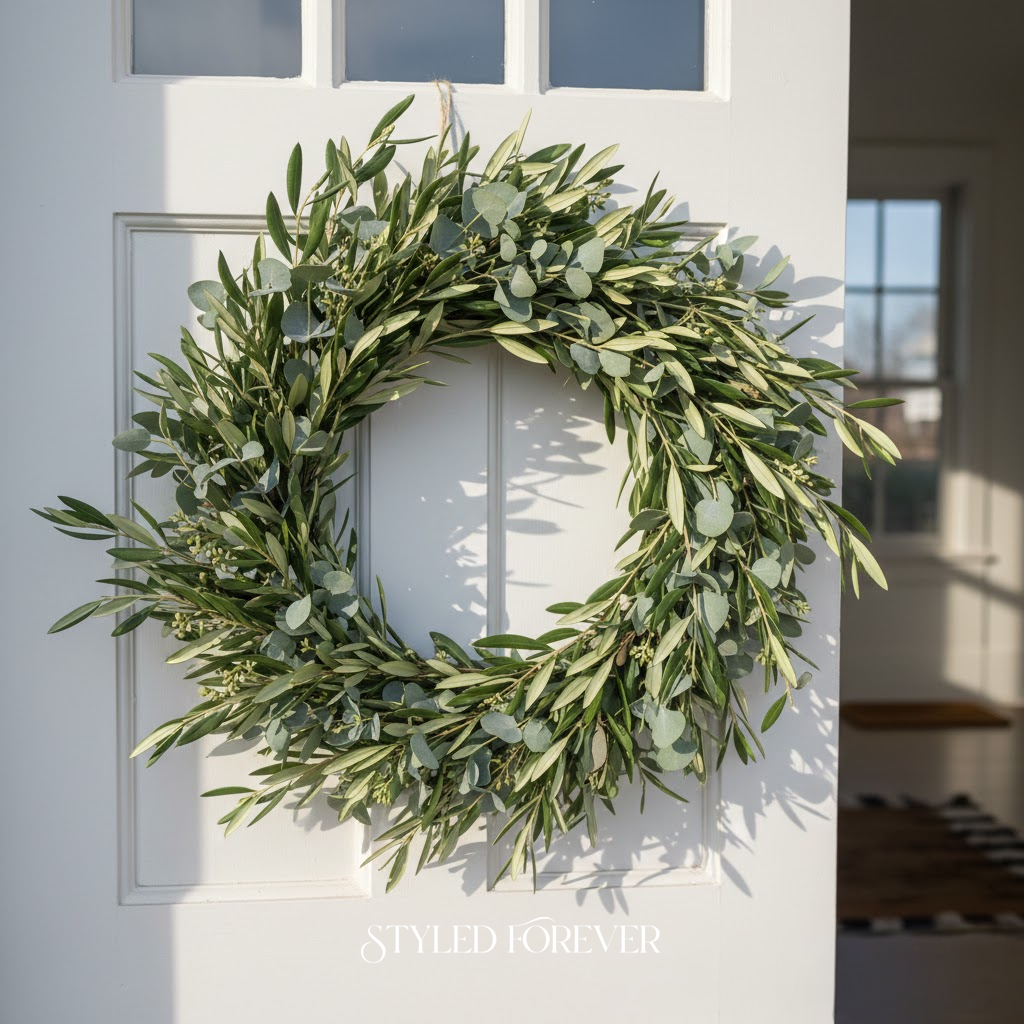
20. Easter Wreaths Made from Greenery
A wreath does not need flowers. Simple greenery—olive branches, eucalyptus, soft leaves—creates a calm welcome. Keep the shape loose. Hang it where it can be seen but not announced. This kind of decoration blends into daily life, becoming part of the home rather than a statement.
21. Table Settings with Open Space
Sometimes the most beautiful decoration is what you leave out. Set the table with intention, then remove one element. Let space remain. This openness allows every other detail to breathe. Easter feels softer when there is room for stillness.
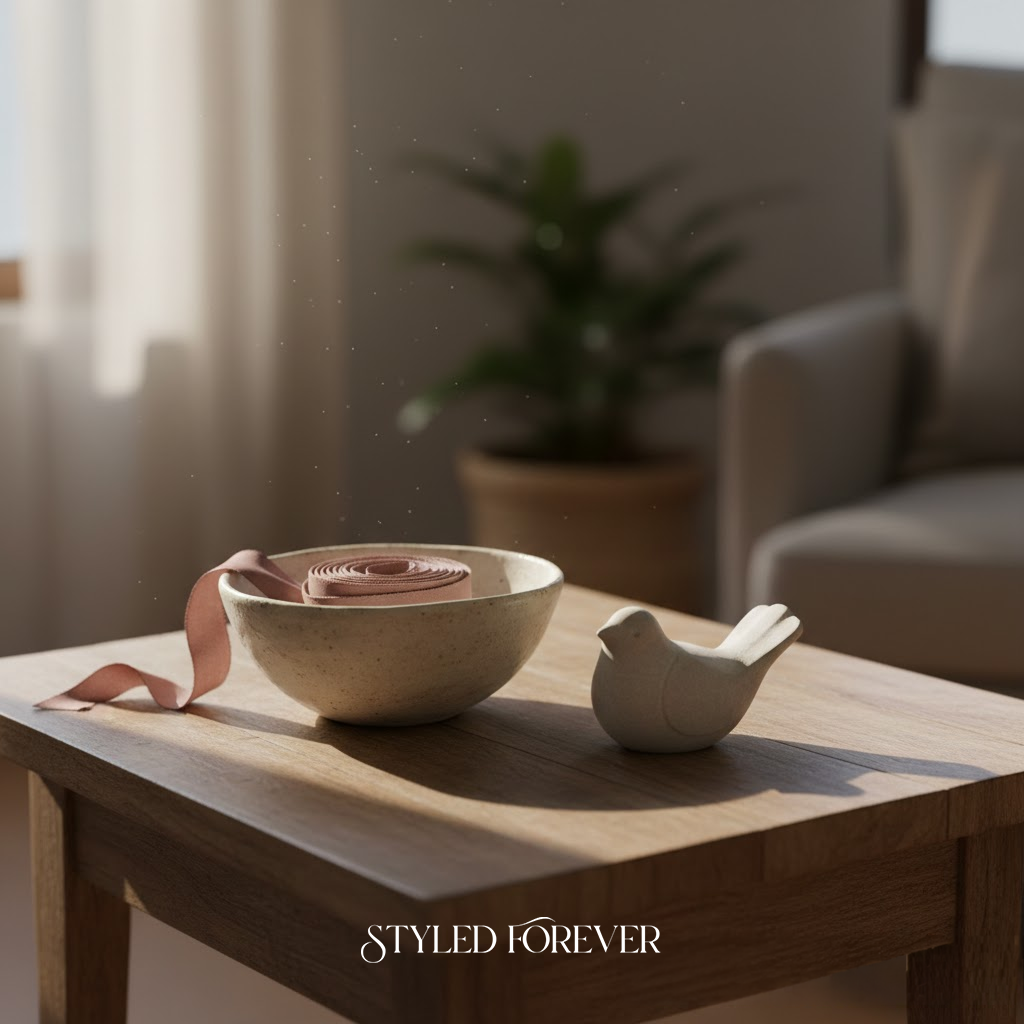
22. A Single Object That Feels Personal
Choose one piece that matters to you—a handmade bowl, a faded ribbon, a small sculpture. Let it represent the season in your own way. This object becomes the heart of your decoration. It is quiet, personal, and enough.
A Gentle Ending
Easter does not need to announce itself.
It can arrive slowly, through texture, light, and care.
As you decorate, listen to what your space asks for.
Some rooms want softness.
Some want emptiness.
Let your home feel like a pause.
Let beauty stay gentle.